
Transport & public spaces · Airports
Ramp, FOD, and restricted areas, on your own infrastructure.
From apron to terminal: ground-vehicle and aircraft proximity, FOD detection, stand-zone discipline, restricted-area control, and passenger-flow analytics: audit-grade and resident inside your own infrastructure.
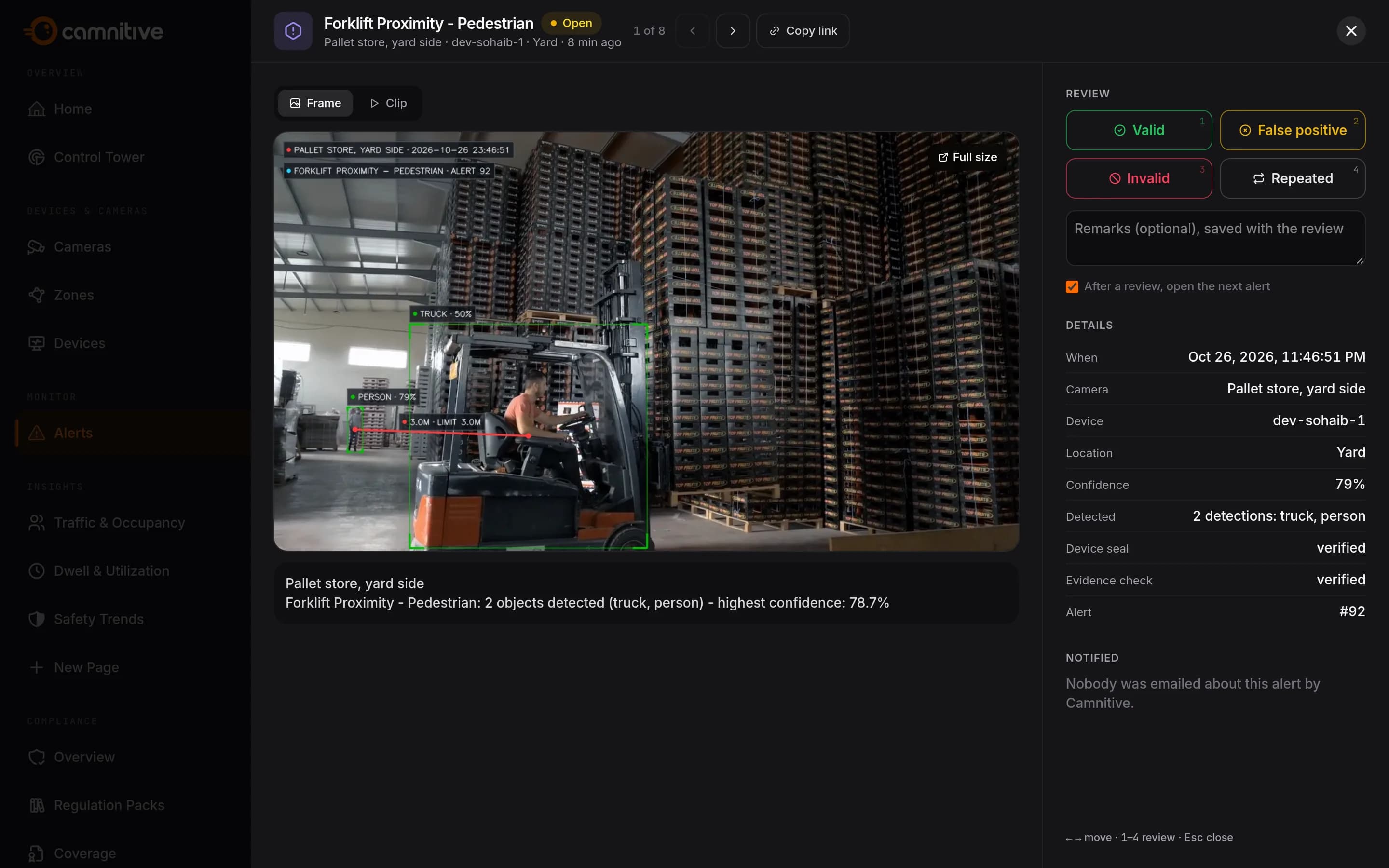
In airports
What goes wrong today.
Ramp incidents cost millions per event
A single vehicle–aircraft strike grounds an airframe and triggers an investigation, and most precursors go unrecorded.
FOD is found by luck, not by process
Debris on stands and taxi lanes is caught by whoever happens to look. Engines pay for what walkdowns miss.
Turnaround delays have no owner
Ground handling milestones are disputed after the fact. Nobody can prove which step slipped on which stand.
Detect · Step 1 of 4
What the cameras watch for.
Airside-ready deployments: on-premises inference with no footage leaving the secure zone.
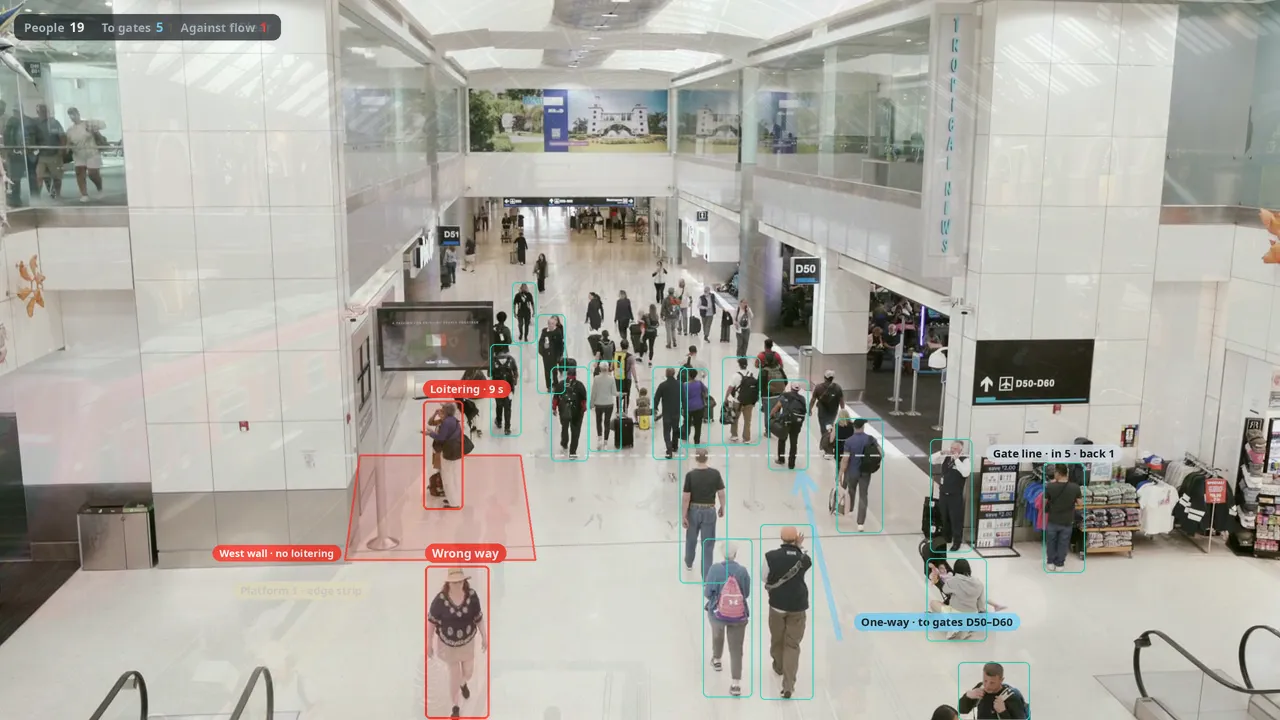
Sealed evidence
Metrovale Central
Demo footage, annotated the way FloFrame does. Each card appears as its alert is raised.
Apron & ramp safety
Vehicle–aircraft and vehicle–person proximity watched on every stand.
FOD & stand-zone discipline
Foreign-object debris on aprons and taxi lanes flagged before it costs an engine, and unexpected people or equipment in the stand envelope too.
Restricted-area intrusion
Airside boundaries and doors enforced with sealed evidence.
Turnaround analytics
Stand occupancy and turnaround milestones measured automatically.
Queue & passenger flow
Checkpoint and check-in queues managed with live density data.
Ground-crew PPE
Vest and hearing-protection verification across ramp operations.
Rules
Rules you would run.
Written in plain words, run on site, checked by a vision model before anyone is alerted.
Apron safety
“No vehicle inside the aircraft safety envelope until chocks are confirmed”
Then: RAMP CONTROL PAGED · CLIP SEALED ✓
Open in the Rule PlaygroundFOD detection
“Flag any debris on the stand between turnarounds”
Then: FOD SWEEP DISPATCHED · CLIP SEALED ✓
Open in the Rule PlaygroundAirside doors
“Alert on any airside door held open beyond 30 seconds”
Then: SECURITY DISPATCHED · EVIDENCE SEALED
Open in the Rule Playground
Measure · Step 2 of 4
Every alert becomes a number you manage.
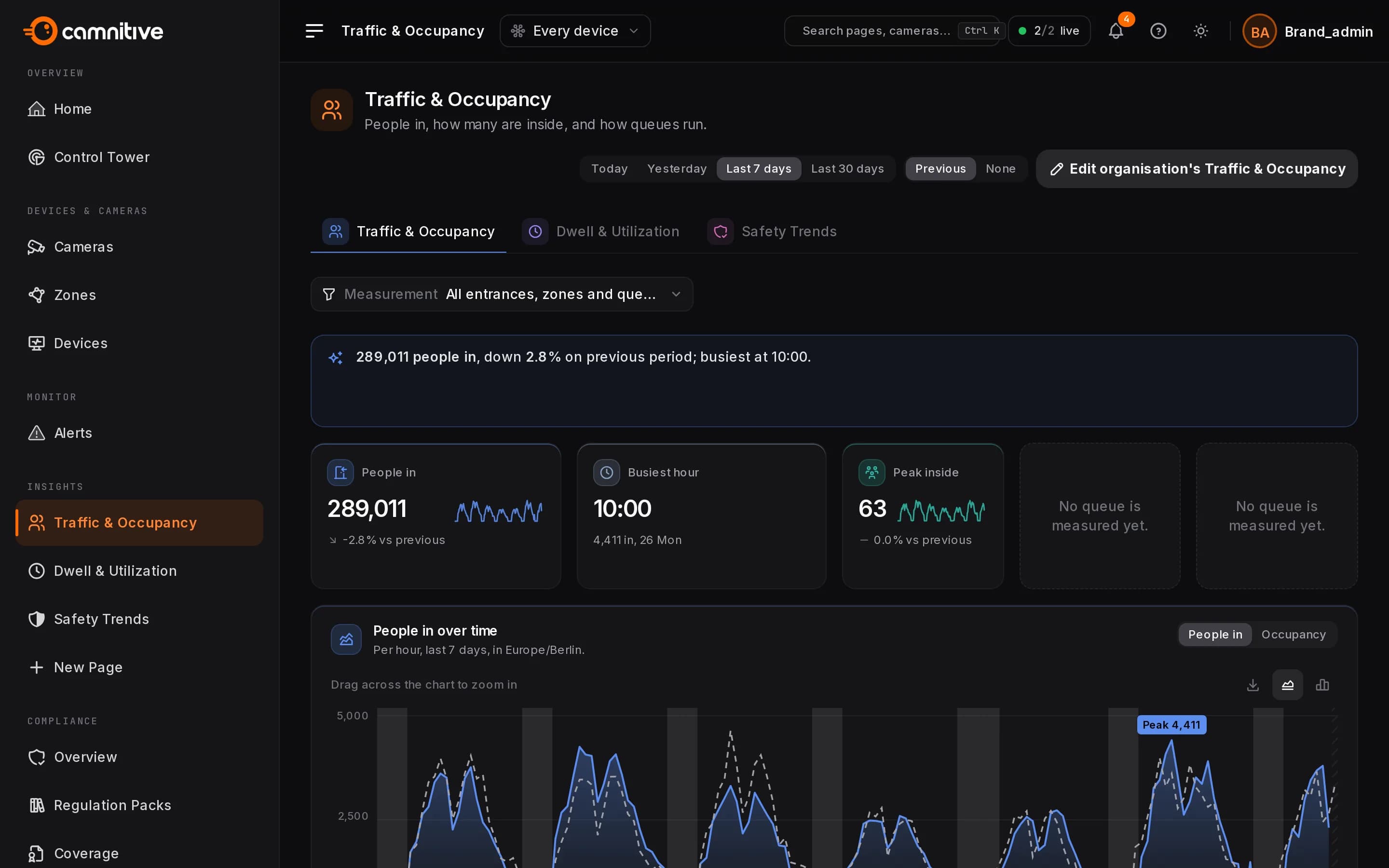
What FloFusion measures for Airports, per zone, per site and over time.
Platform-edge dwell
Time people stand on the edge strip, highest as trains arrive.
Concourse density
People per zone against its limit, minute by minute.
Gate throughput
People through each gate line, in and out, by hour.
What a pilot sets out to move
- fewer ramp proximity events
- 30–50%
- typical pilot target per covered stand
- to detect FOD on stands
- Seconds
- flagged between turnarounds automatically
- turnaround milestones measured
- Every stand
- evidence for handler SLAs
Pilot targets agreed with you up front, not past results.
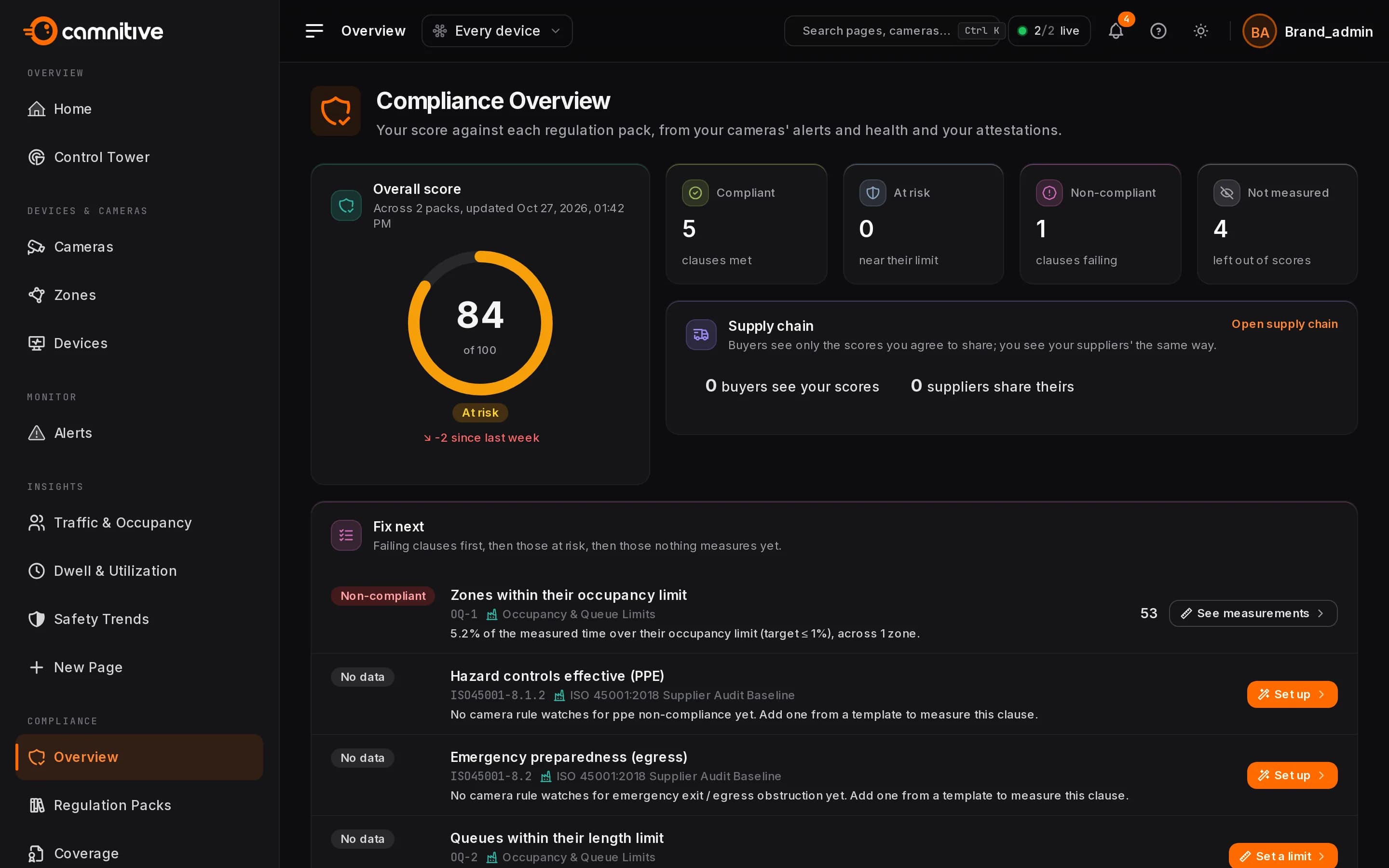
Comply · Step 3 of 4
Proof that holds up with auditors.
The rules that apply to Airports, scored continuously from camera evidence, with a signed record anyone can verify.
EU AI Act
AI used for workplace monitoring and safety is high-risk: you must run risk management, keep event logs, maintain technical documentation, and guarantee human oversight and accuracy monitoring.
NIS2 Directive
Essential and important entities must secure their network and information systems (including OT and camera networks), with incident reporting duties.
UK GDPR and Data Protection Act 2018
Video of identifiable people is personal data: you need a lawful basis, transparency, data minimisation and retention limits, and a DPIA before systematic monitoring of staff.
ICO guidance on monitoring workers
Monitoring must be necessary, proportionate and open: tell workers what you monitor and why, consult them, choose the least intrusive means, and avoid covert monitoring.
Improve · Step 4 of 4
What to change next.
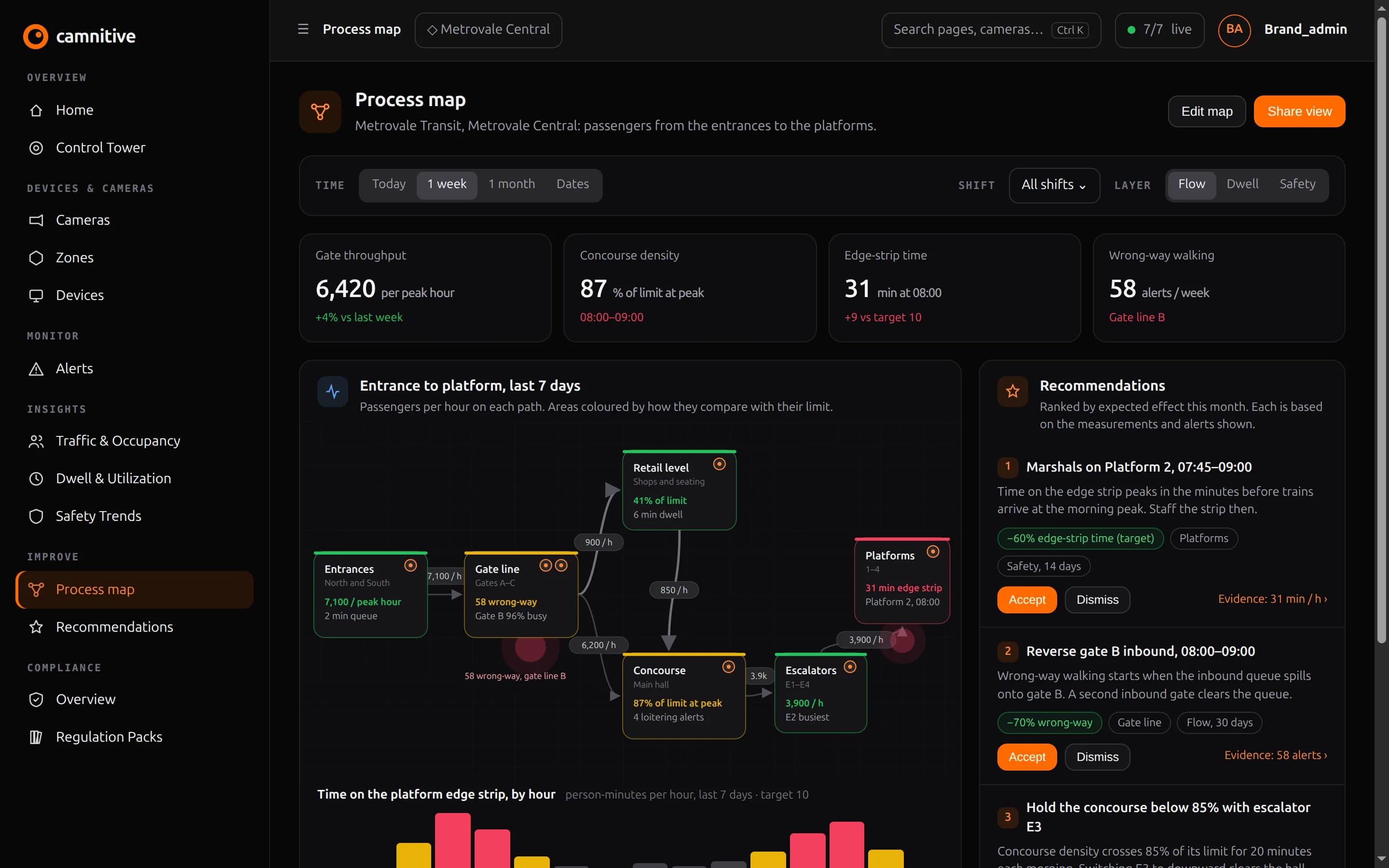
The process map shows where crowds build and how people move against the flow.
Marshals on the platform at peak
Staff the edge strip in the minutes before trains, when dwell peaks.
Reverse a gate at the morning peak
Open a second inbound gate between 08:00 and 09:00, where wrong-way walking starts.
Examples of what a pilot’s process map points to.
Getting started
A pilot on the cameras you own.
Prove apron proximity, FOD detection, and restricted-area control on a set of stands: airside-grade evidence, resident inside your own infrastructure, live in days.
Scope
- Aircraft stands and equipment lanes (vehicle–aircraft and vehicle–person proximity)
- Aprons and taxi-lane edges (FOD detection, unexpected people or vehicles in restricted zones)
- Airside doors and boundaries (restricted-area intrusion)
- One terminal checkpoint or check-in bank (queue and flow analytics)
We configure
- Plain-English stand-safety and restricted-area rules tied to turnaround activity
- FloFrame on-prem inference inside your airside network: video never leaves it
- Escalation to airside operations, safety, and security teams by severity
- FloFusion evidence and turnaround-milestone reporting per stand
You walk away with
- Faster time-to-awareness for FOD, stand-zone, proximity, and intrusion events
- Turnaround-milestone baselines on pilot stands
- Sealed, audit-grade evidence for every airside exception in scope
Questions
Airports: common questions.
Can Camnitive run inside our airside network without external connectivity?
Yes. FloFrame processes video inside your network, and FloFusion can be deployed privately in your own data centre or cloud. FloFrame only ever connects out to FloFusion.
Link to this questionHow reliable is FOD detection on an active apron?
FOD is a standard detection on the cameras already covering stands and taxi-lane edges. Zones and size thresholds are tuned in the pilot, and each alert carries a frame so ops can check before sending a sweep.
Link to this questionDoes this interfere with our existing airport operational systems?
No. Camnitive reads camera streams beside your VMS. FloFusion connects to your operations, safety-reporting and ticketing tools through webhooks and integrations.
Link to this questionCan we measure turnaround performance with the same cameras?
Yes. Stand occupancy and turnaround milestones such as on-block, ground equipment arrival and pushback are measured from the same cameras, per stand.
Link to this questionHow do passenger-privacy rules affect terminal analytics?
Queue and flow analytics are anonymous. Facial recognition and biometric identification are not part of the platform.
Link to this questionWhat does an airport pilot look like?
Usually 20–50 cameras across a few stands, one checkpoint and key airside boundaries. It runs for a few weeks against criteria agreed up front: alert precision, time to awareness and evidence quality.
Link to this questionSee it on your own cameras.
A demo on footage from an operation like yours, then a pilot on the cameras you own.