
Transport & public spaces · Public Infrastructure
Crowds, crossings, and assets: data that stays in-country.
Stations, bridges, plants, and public venues: crowd density and flow, traffic and pedestrian safety, intrusion detection, and asset-condition monitoring, sovereign by design, with data that never leaves your jurisdiction.
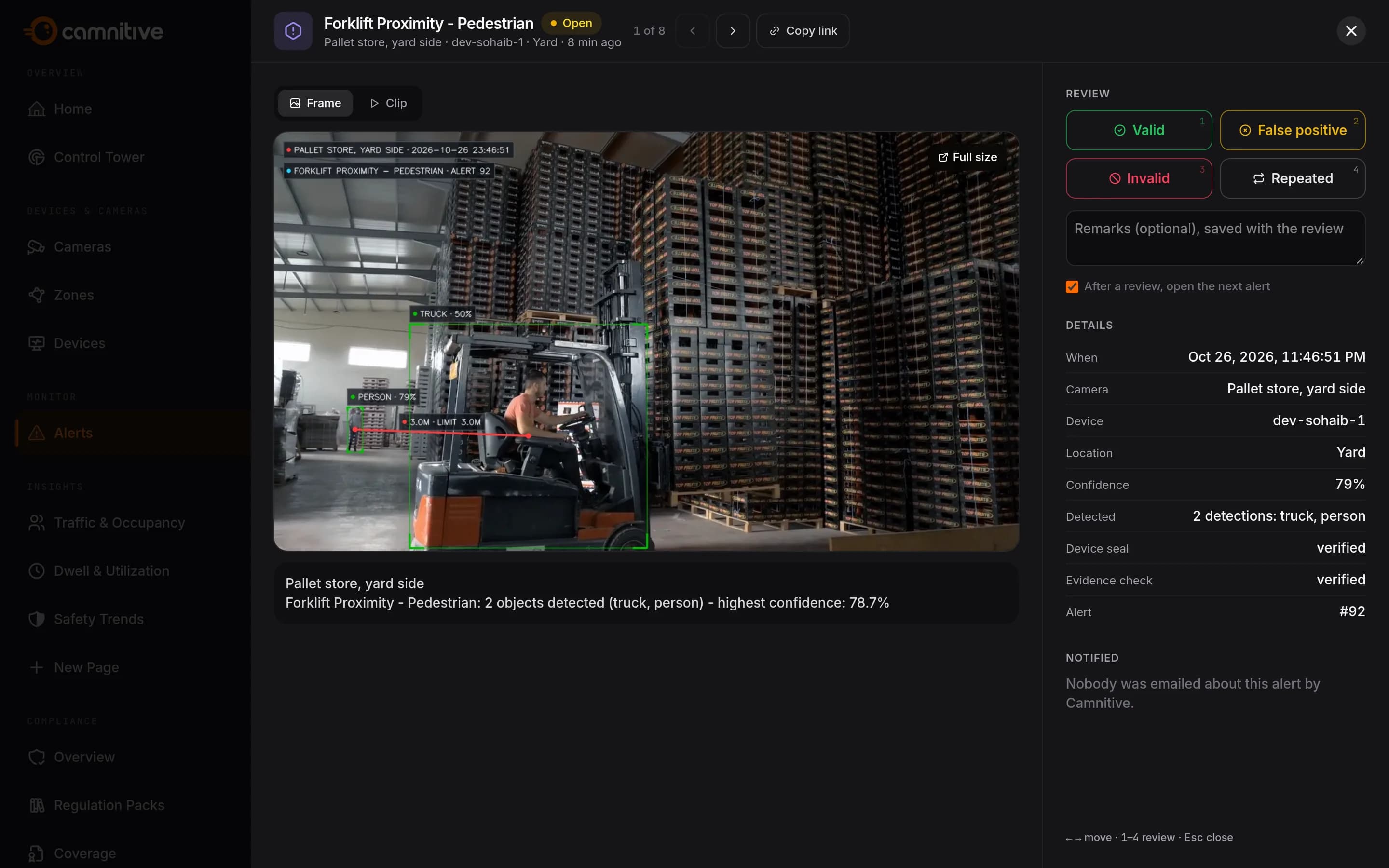
In public infrastructure
What goes wrong today.
Estates sprawl faster than staffing
Plazas, bridges, depots, and plant rooms multiply. Patrol coverage and budgets do not.
Enforcement fails without evidence
Vandalism, dumping, and unauthorized access go unprosecuted because the record is missing or unusable.
Critical assets get attention after the incident
Intrusion at substations, plant rooms, and control points is systematically under-detected until something fails.
Detect · Step 1 of 4
What the cameras watch for.
Sovereign deployment for government estates: processing and evidence stay in-country by design.
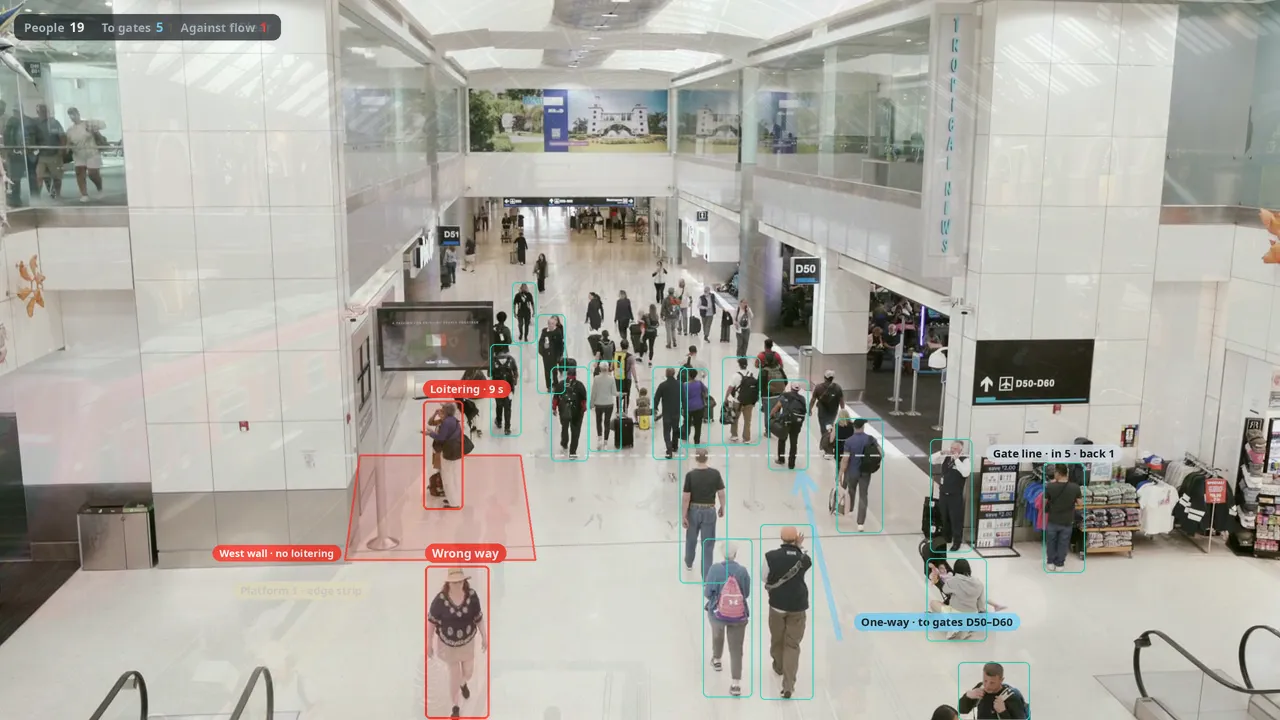
Sealed evidence
Metrovale Central
Demo footage, annotated the way FloFrame does. Each card appears as its alert is raised.
Crowd density & flow
Live occupancy and surge detection in stations and venues.
Traffic & pedestrian safety
Conflict points and risky crossings identified and trended.
Perimeter & intrusion
Critical assets protected with continuous visual coverage.
Vandalism & incident evidence
Sealed records for enforcement and claims.
Restricted zones
Track beds, plant rooms, and hazardous areas enforced.
Asset condition watch
Visual anomalies on public assets caught early.
Rules
Rules you would run.
Written in plain words, run on site, checked by a vision model before anyone is alerted.
After-hours plazas
“Only permitted vehicles on the plaza after hours”
Then: CITY OPS ALERTED · PLATE LOGGED
Open in the Rule PlaygroundRestricted assets
“No entry to plant rooms and restricted assets without authorization”
Then: CONTROL ROOM PAGED · CLIP SEALED ✓
Open in the Rule PlaygroundLoitering watch
“Flag loitering at critical assets beyond 10 minutes”
Then: PATROL DISPATCHED · EVIDENCE SEALED
Open in the Rule Playground
Measure · Step 2 of 4
Every alert becomes a number you manage.
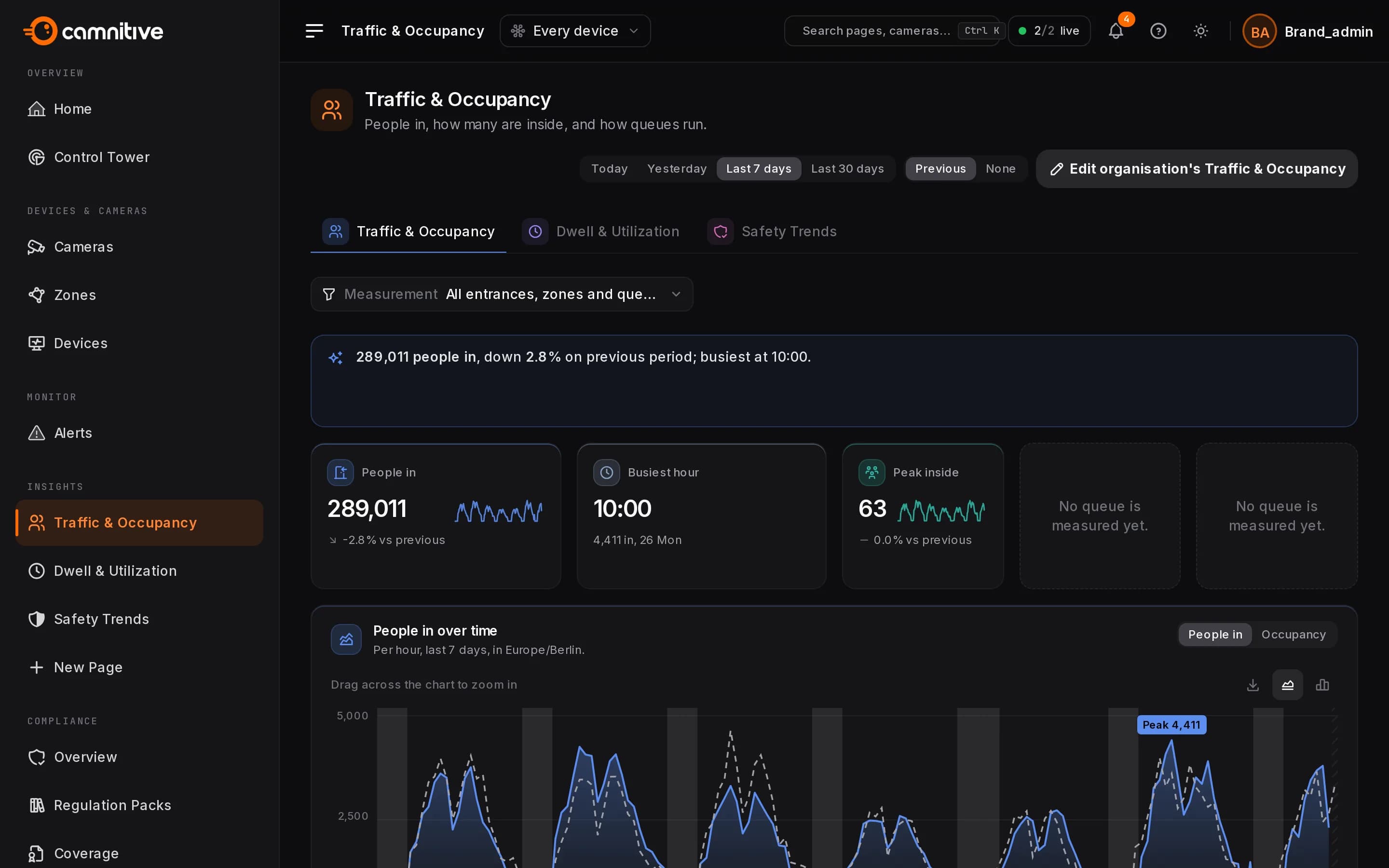
What FloFusion measures for Public Infrastructure, per zone, per site and over time.
Platform-edge dwell
Time people stand on the edge strip, highest as trains arrive.
Concourse density
People per zone against its limit, minute by minute.
Gate throughput
People through each gate line, in and out, by hour.
What a pilot sets out to move
- to detect intrusion
- Seconds
- at critical assets, around the clock
- to enforcement-grade evidence
- Minutes
- sealed records for police and prosecutors
- fewer patrol hours on covered assets
- 70%
- typical pilot target
Pilot targets agreed with you up front, not past results.
Comply · Step 3 of 4
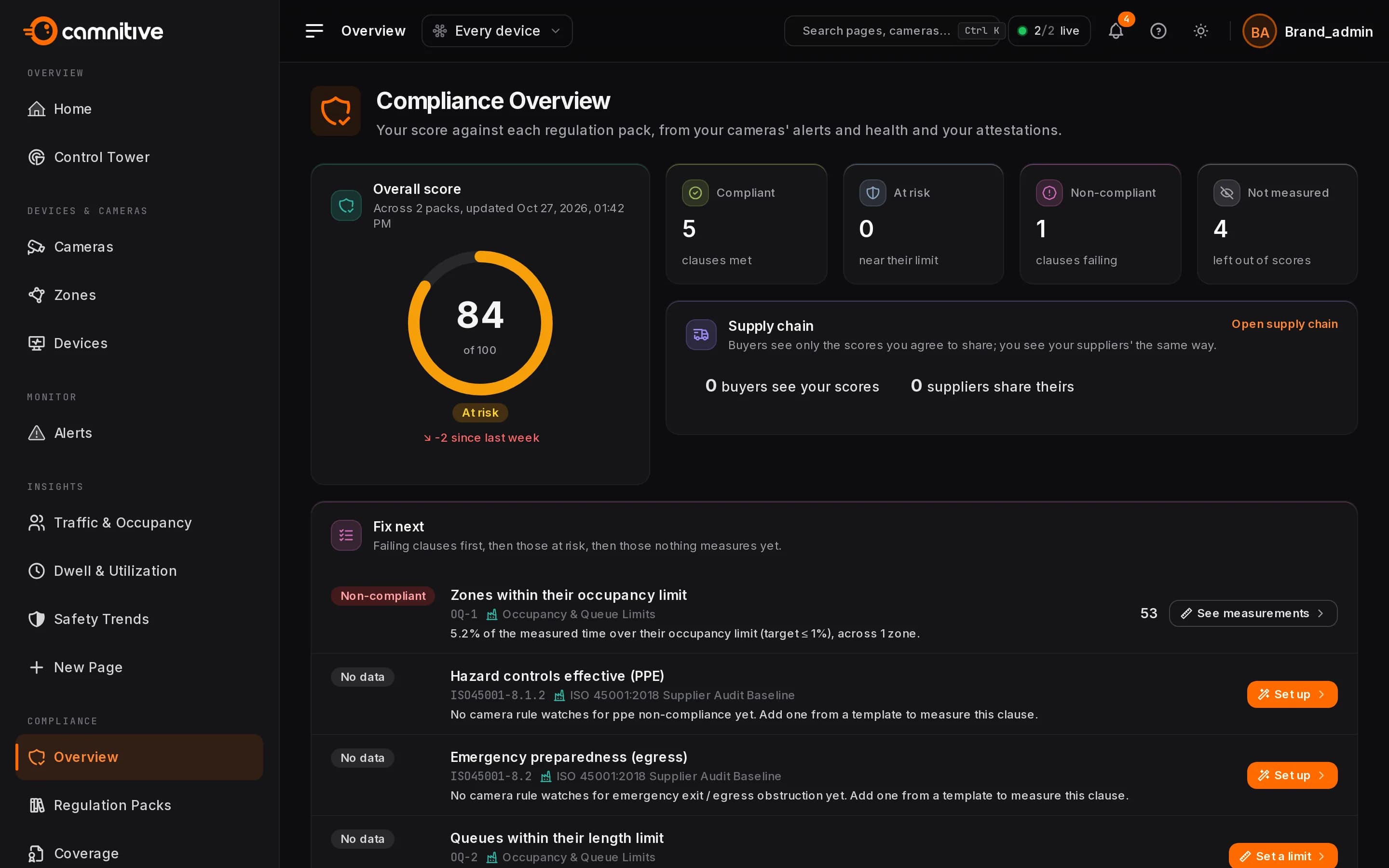
Proof that holds up with auditors.
The rules that apply to Public Infrastructure, scored continuously from camera evidence, with a signed record anyone can verify.
EU AI Act
AI used for workplace monitoring and safety is high-risk: you must run risk management, keep event logs, maintain technical documentation, and guarantee human oversight and accuracy monitoring.
NIS2 Directive
Essential and important entities must secure their network and information systems (including OT and camera networks), with incident reporting duties.
UK GDPR and Data Protection Act 2018
Video of identifiable people is personal data: you need a lawful basis, transparency, data minimisation and retention limits, and a DPIA before systematic monitoring of staff.
ICO guidance on monitoring workers
Monitoring must be necessary, proportionate and open: tell workers what you monitor and why, consult them, choose the least intrusive means, and avoid covert monitoring.
Improve · Step 4 of 4
What to change next.
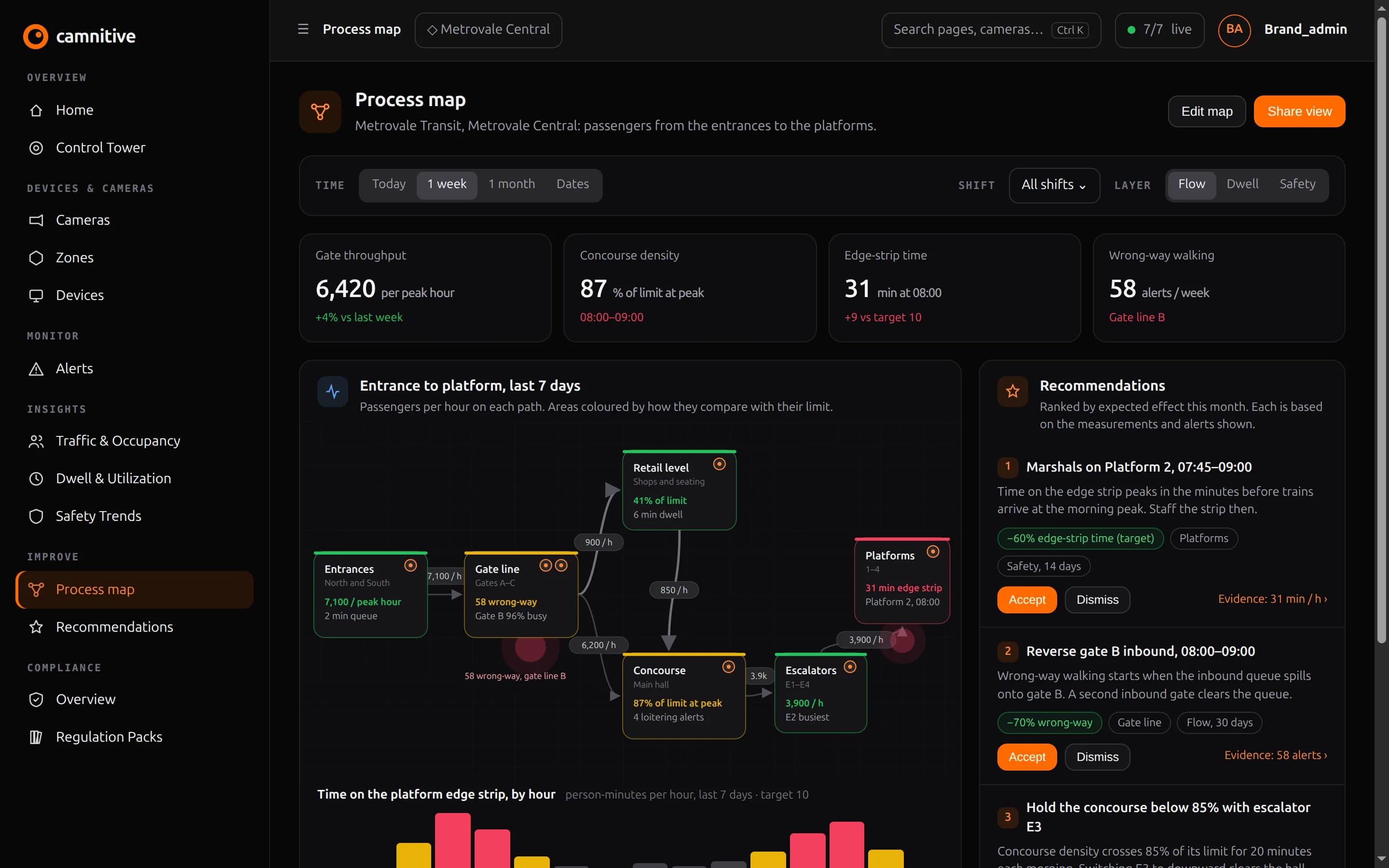
The process map shows where crowds build and how people move against the flow.
Marshals on the platform at peak
Staff the edge strip in the minutes before trains, when dwell peaks.
Reverse a gate at the morning peak
Open a second inbound gate between 08:00 and 09:00, where wrong-way walking starts.
Examples of what a pilot’s process map points to.
Getting started
A pilot on the cameras you own.
Prove crowd-density, intrusion, and asset-condition monitoring at 2–3 sites: sovereign by design, with video and data that never leave your jurisdiction.
Scope
- Stations, venues, or public spaces (crowd density and surge)
- Critical-asset perimeters (intrusion with sealed evidence)
- Traffic and pedestrian conflict points (safety analytics)
- Restricted areas: plant rooms, track beds, hazardous zones
We configure
- Plain-English density, intrusion, and zone rules per site and schedule
- FloFrame in-jurisdiction inference: video never crosses the border
- Escalation paths for control rooms, security, and maintenance teams
- FloFusion evidence records for enforcement, claims, and public reporting
You walk away with
- Faster time-to-awareness for surge, intrusion, and safety events
- Documented asset-condition and vandalism records with evidence
- A sovereignty architecture your legal and security teams have verified
Questions
Public Infrastructure: common questions.
Our mandate requires full data sovereignty. Can Camnitive guarantee it?
You choose where everything runs. FloFrame processes video in your jurisdiction, and FloFusion can be deployed privately inside your own infrastructure, so no video, events or metadata need to cross a border.
Link to this questionHow does crowd monitoring avoid becoming surveillance of individuals?
Density and flow analytics are aggregate and anonymous. Facial recognition and biometric identification are not part of the platform.
Link to this questionCan this scale from one station to a network?
Yes. Policies are versioned and roll out to a pilot site first, then the network, with zones adjusted per site. Every site keeps the same evidence standard.
Link to this questionWhat evidence supports enforcement and prosecutions?
Each intrusion, vandalism or safety event is sealed on the device with its clip and verified on arrival. That record supports enforcement, claims and public reporting.
Link to this questionCan asset-condition monitoring reduce inspection costs?
Rules on existing cameras flag debris, obstructions, leaks and spills on stations and public assets between inspections, so crews go where the evidence points.
Link to this questionHow does procurement typically structure a pilot?
2–3 representative sites and 20–50 cameras, measured over an agreed period on detection precision, evidence quality and data handling. Architecture documents come up front for security review.
Link to this questionSee it on your own cameras.
A demo on footage from an operation like yours, then a pilot on the cameras you own.