



Transportation Solutions
Sovereign Visual Intelligence for Fleets, Depots, and YardsCamnitive turns the cameras transportation operators already own into a sovereign operations-intelligence and compliance system of record. Alerts alone aren't evidence; Camnitive gives you the answer to “prove it” — for regulators, insurers, and safety auditors. Monitor driver behavior, collision risks, and load/unload performance with rules written in plain English, deployed in days on existing depot and yard cameras, with video and data kept in-country end to end.
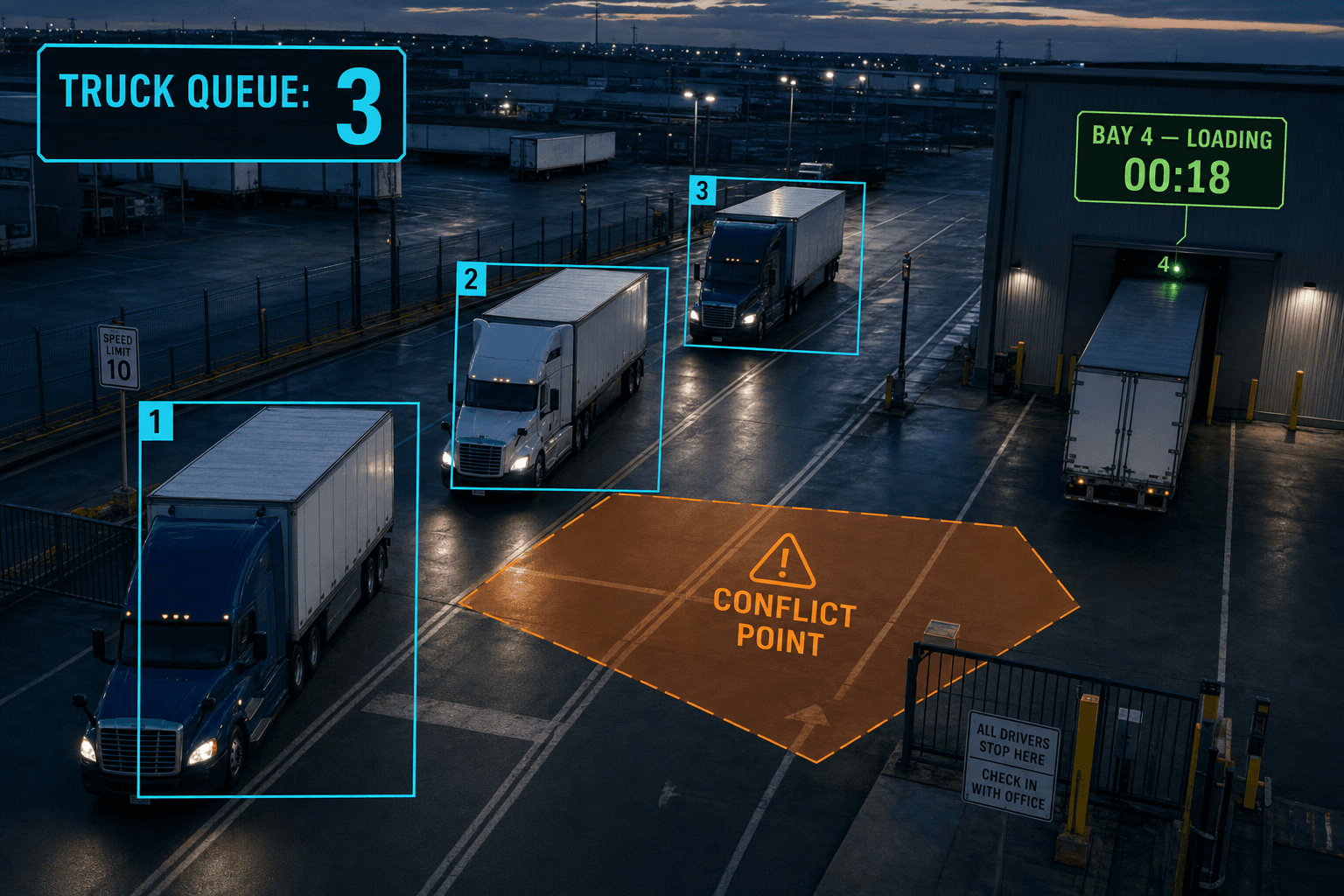
What You Can Enable
- Driver behavior monitoring against policies you write in plain English
- Collision alerts and near-miss detection at crossings and conflict points
- Load/unload duration tracking with time-stamped evidence per bay and dock
- Depot and yard visibility: vehicle counting, truck queues, yard occupancy
- Incident capture with visual evidence and an AI-written event narrative
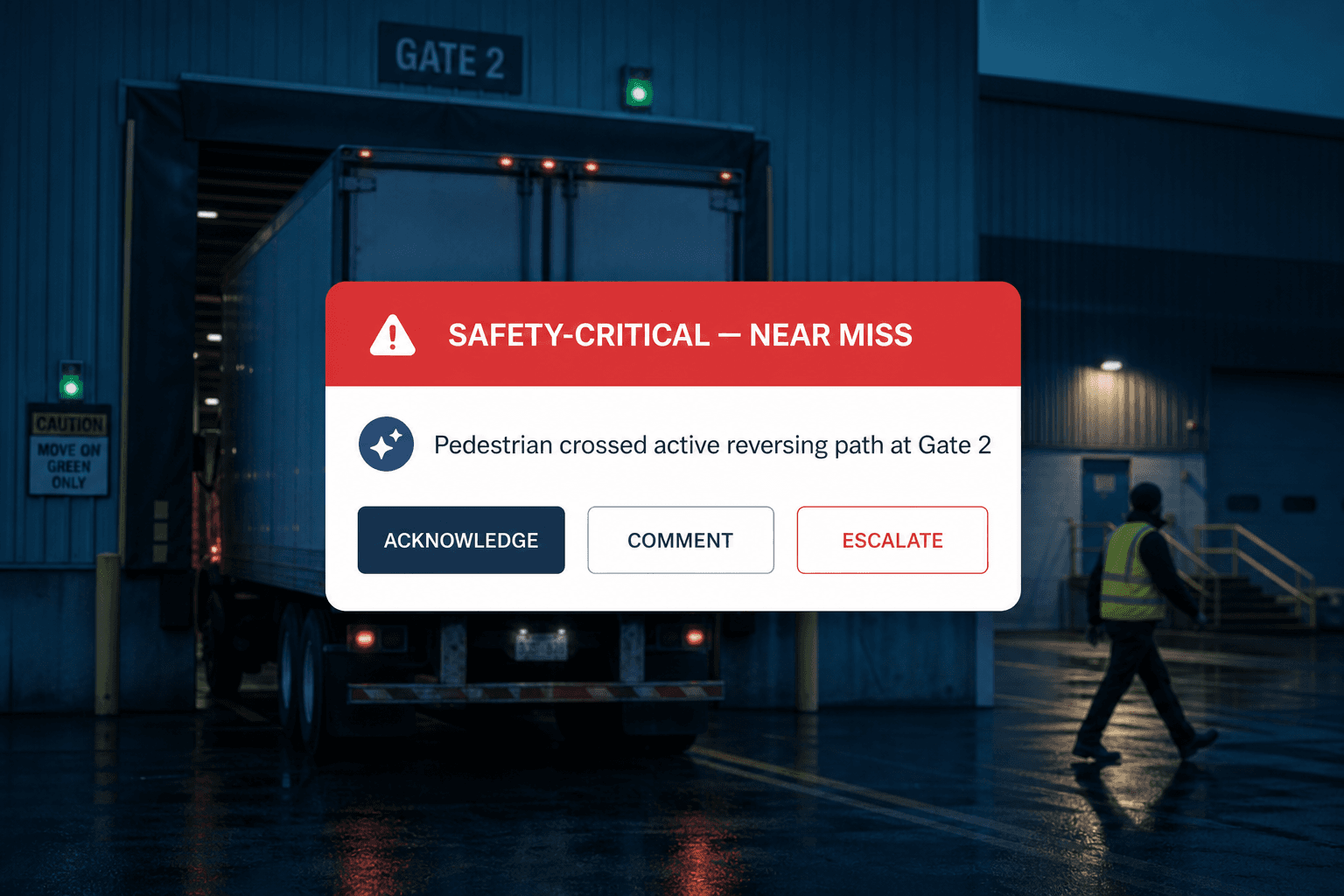
Operational Workflows
- CamEdge detects events on your existing cameras; a deterministic rules engine decides what fires
- On-prem AI explains each event in your own safety-policy language — evidence, not just an alert
- Alerts routed by severity (safety-critical vs informational) with acknowledge, comment, and escalate
- Trend reporting by site/route/zone/time window for coaching and continuous improvement
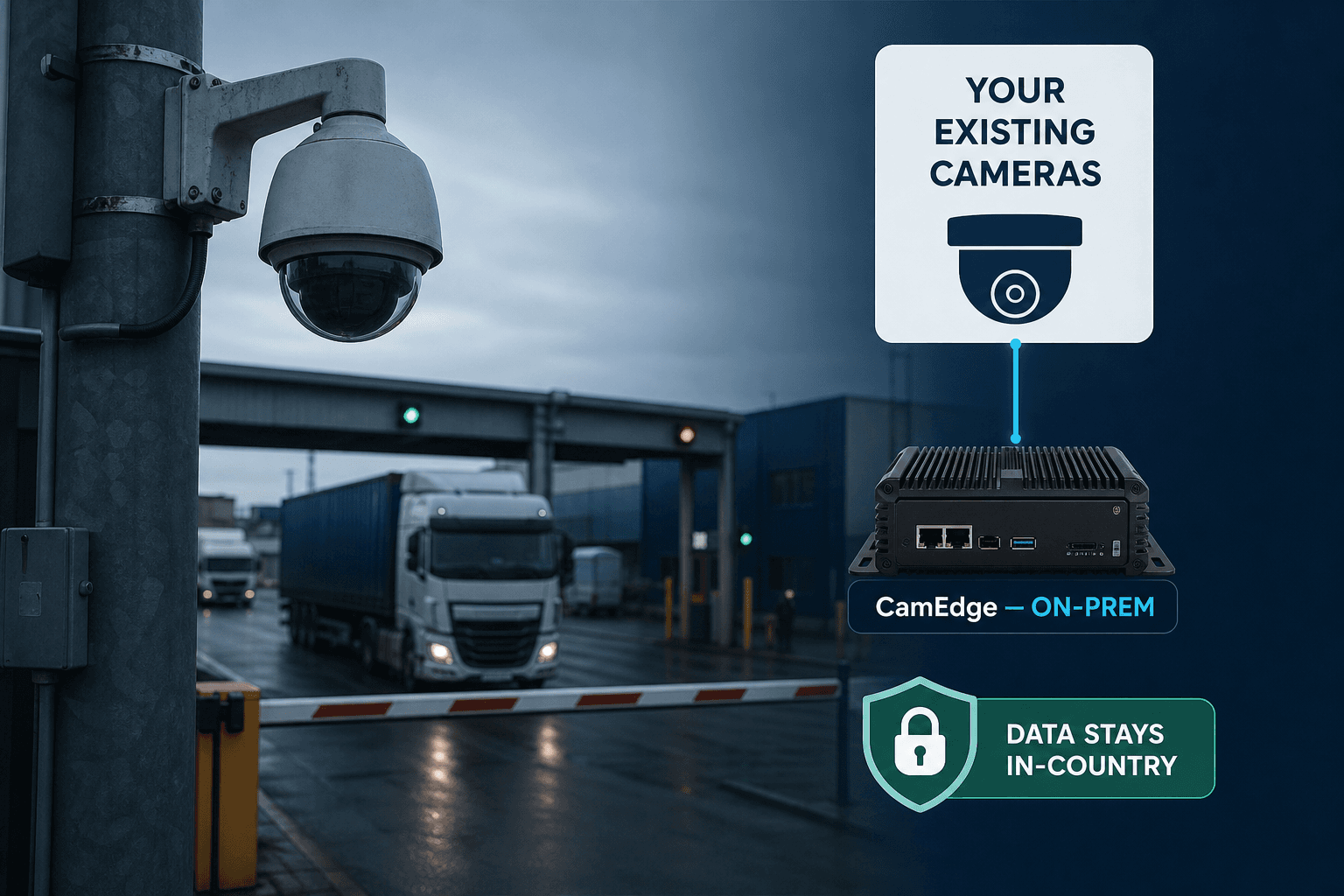
Deployment Fit
- Works on the depot, gate, and yard cameras you already own — no rip-and-replace
- Zero-training deployment: no annotation projects, no per-site model tuning, live in days
- Video and data stay in-country — aligned with the EU AI Act and Saudi PDPL residency requirements
- CamCore as your system of record (cloud or in-country), with webhooks/ticketing/messaging integrations
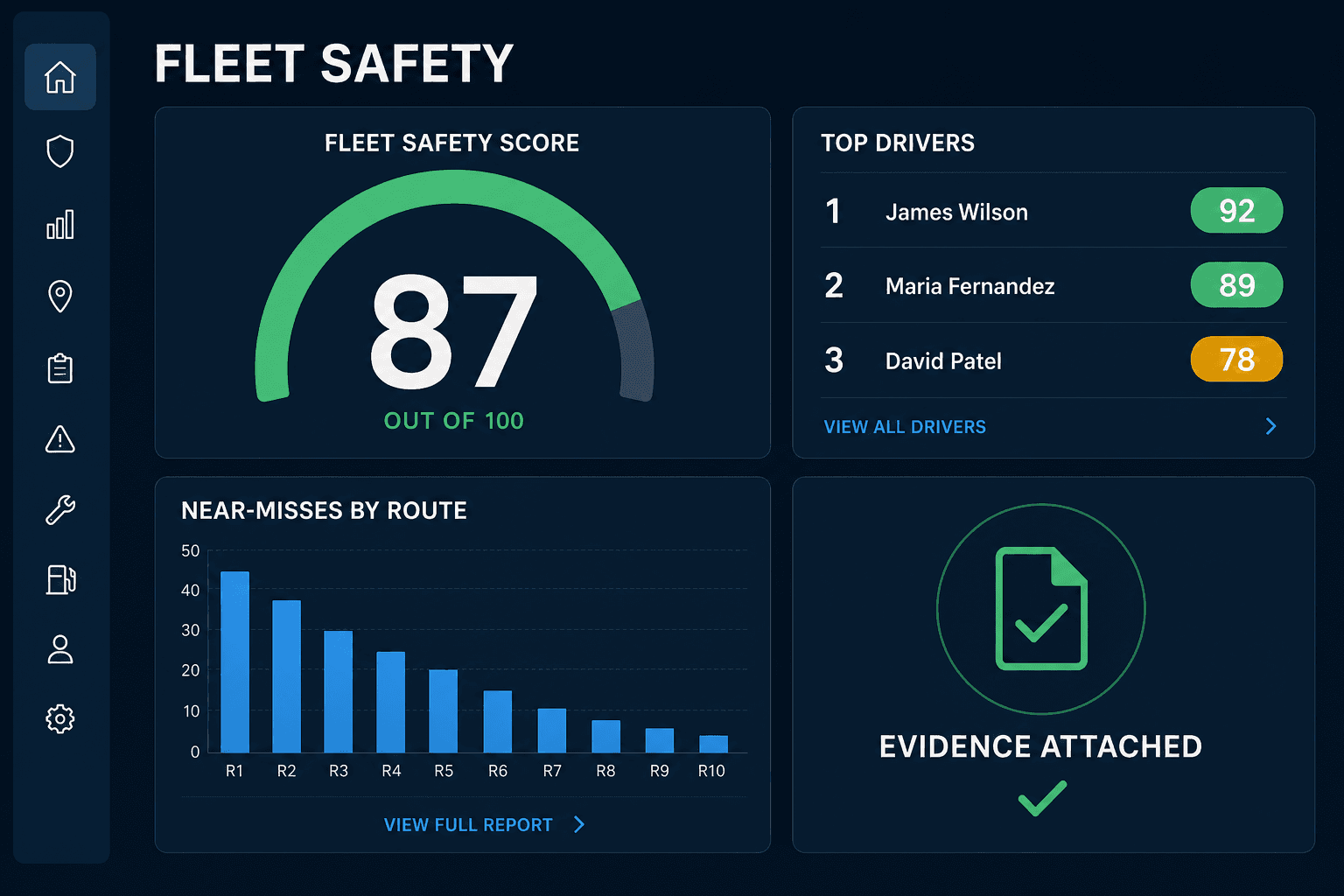
Outcomes You Can Measure
- Reduced time-to-awareness for collisions, near-misses, and yard conflicts
- Consistent driver coaching and safety scoring backed by visual evidence
- Load/unload and queue metrics that expose depot bottlenecks
- Coming next: DriveSense fleet analytics (launching Aug 2026) and insurance/safety scoring
Talk to Sales · Request a Transportation Demo
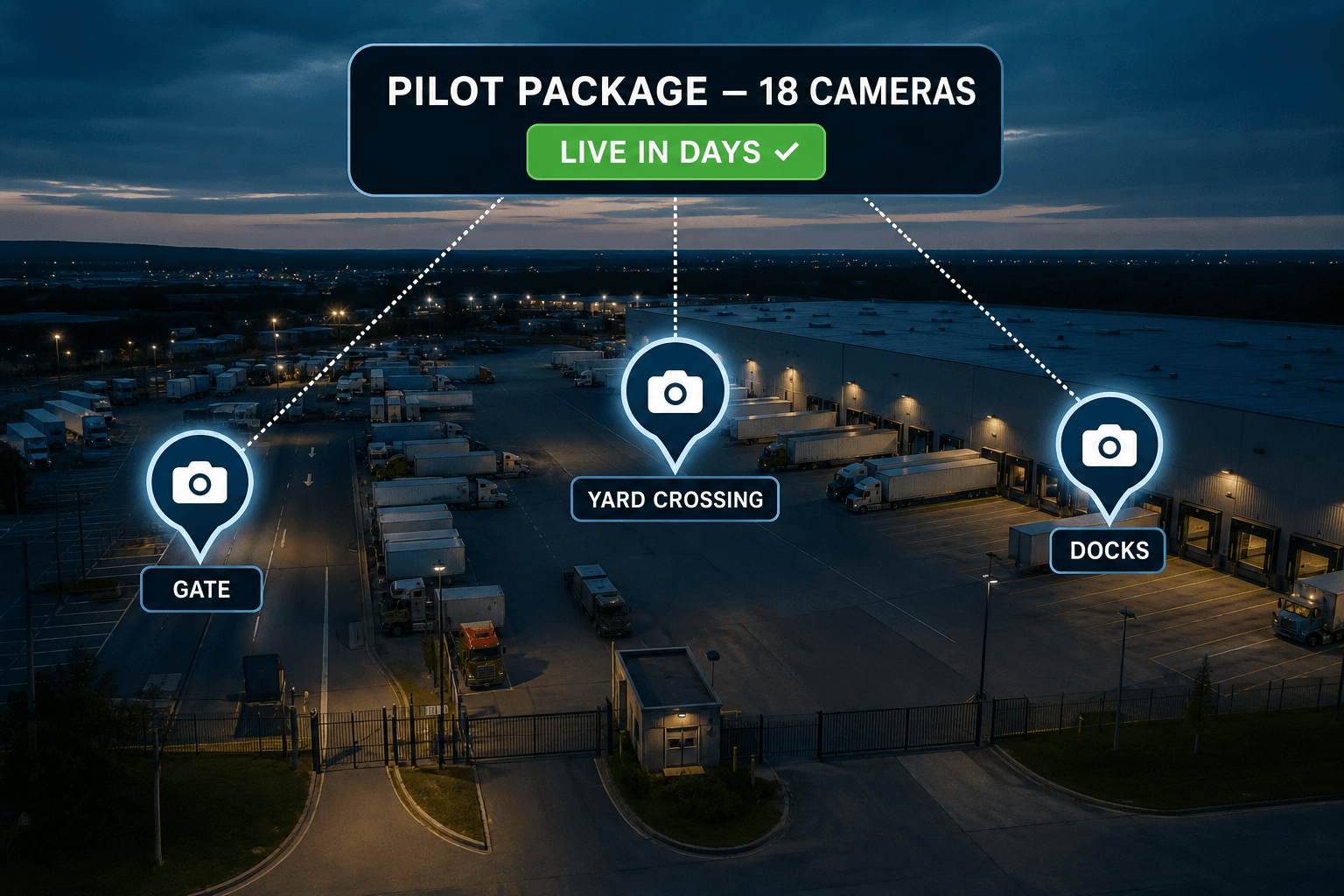
Recommended Pilot Package
Transportation- Pilot Goal:Deployed in days, not weeks — prove collision/near-miss visibility, driver behavior monitoring, and load/unload tracking in controlled zones, with zero training data and no per-site model tuning.
- Suggested Scope: 10–50 of your existing cameras across:Gate/entry and dispatch lanes (truck queues, vehicle counting)
Yard areas with crossings or conflict points (collision alerts, yard occupancy)
Loading docks and bays (load/unload duration)
Parking/after-hours zones (intrusion and anomalies) - What we configure:Plain-English safety and behavior rules per zone
Conflict-point ROIs (crossings, lane boundaries) and time-in-zone thresholds
Severity and escalation paths (safety vs operations)
Shift-aware schedules (peak vs after-hours) - Success Metrics:Reduction in nuisance alerts after tuning
Improved time-to-awareness for safety exceptions
Evidence-backed reporting by site/zone/time window for coaching and operations
A roadmap for what's next: DriveSense fleet analytics (launching Aug 2026) and insurance/safety scoring
Frequently asked questions
Transportation — FAQ + Recommended Pilot Package
Answers to common questions from fleet, safety, and depot operations teams — from camera coverage and driver behavior policies to compliance evidence and data residency.
Most customers start with the fixed cameras they already own at depots, yards, and gates — no rip-and-replace. In-vehicle driver behavior and fleet analytics arrive with DriveSense, launching August 2026.
Pilots of 10–50 cameras deploy in days, not weeks. You write driver behavior and safety rules in plain English — no training data, no annotation projects, and no per-site model tuning.
Yes. Policies can be configured per site, per zone, and per schedule window — so gate, yard, and dock rules can differ by location and by peak vs after-hours periods.
A deterministic rules engine — not a black box — decides what fires. Zoning, time-based thresholds, and cooldowns keep the signal clean, with safety-critical alerts separated from operational insights.
More than a notification: each event carries time, camera, rule context, visual evidence, and an on-prem AI-written narrative in your own safety-policy language — so when an insurer or regulator says 'prove it,' the answer is already on file.
Yes. CamEdge runs inference on-prem for low-latency detection at crossings and conflict points. Specific alert behaviors depend on camera placement and the configured policy.
In-country, end to end. CamEdge processes video on-prem, and CamCore can run in the cloud or in-country — supporting EU AI Act and GDPR obligations, GCC data-protection laws such as the Saudi and UAE PDPL, and ASEAN privacy laws.
Yes. Teams route alerts into existing workflows via webhooks, ticketing, and messaging integrations, with CamCore as the system of record for reporting and audits.
Yes. The cameras that enforce safety rules at docks, gates, and yards also feed dwell-time and turnaround analytics — so the deployment that protects your people pays back in throughput as well.